Tag Archives: Reviews

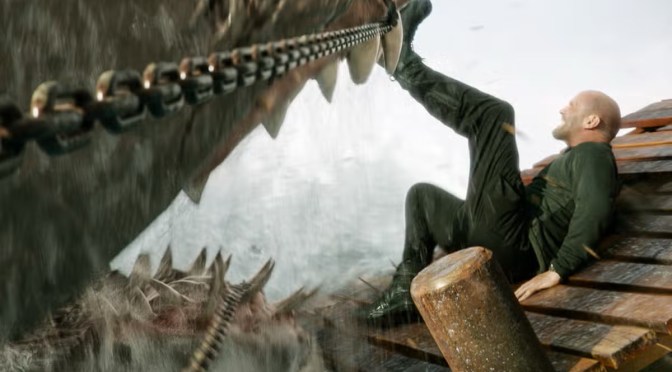
Meg 2: The Trench | Review

★★

When is dumb fun just dumb? When is homage just stealing? Meg 2: The Trench – and the definition of a un-called for sequel – answers on both counts with with two soggy thumbs in its own wet face. As directed by the once interesting Ben Wheatley, the film plods along with listless energy, tugging along a desperately shipwrecked cast with all the enthusiasm of an industrial trawler. To its minor credit, things pick up in a last ditch dash of bonkers. This is a film of thirds. The first third is poor. The second is even worse. Only in the final third does Meg 2 find any semblance of the batshit mojo it should have enjoyed from the off and only by pilfering from the back catalogue. Jaws was never really about the shark, Meg 2 is but frequently seems to forget it.

Continue reading Meg 2: The Trench | Review

Mavka: The Forest Song | Review

★★★

There’s much to like about Mavka: The Forest Song. This being the Oleh Malamuz and Oleksandra Ruban directed Ukrainian animation that is currently enjoying a limited but UK wide cinema release. Based on a 1918 play by poet Lesya Ukrainka, the film unites folkish mythos with a more pointed contemporary resonance. If that element wisps over the heads of Mavka’s target audience, a call for unity and message of hope should at least land rather nicely.

A dedication to the Slavic cultural heritage is chief among the film’s pleasures. While Mavka herself is largely distanced from the sprite of lore – who had a penchant for tickling men to death – the film around her boasts a patchwork of artistic lineage. This pervades all from the hyperlocality of the traditional clothing worn by the film’s village stock to the patterned interlocking of the farmed fields around them.

Nature is, too, central here. A charming sequence early in the film finds Mavka (voiced, in English, by Laurie Hymes) awaken the Spring from its Winter slumber. Remarkably well realised water rushes through the dried out valley, as a rush of floral beauty bursts into life on the banks beside. There’s something of the Pochantonas as vibrant leaves swirl up with the wind. Such is a reference point that only grows with the arrival of Eddy Lee’s Lukas into the forest and Mavka’s heart.

It is through Lukas’ naivety that the film best channels its thinly veiled allegories to the Russian invasion of Ukraine. A gentle soul, Lukas is catnip to the whims of dictatorial oligarch Kylina (Sarah Natochenny), who offers high wealth in return for a helping hand in her will to take back the heart of the forest. Not that Lukas knows this. It’s a plot reminiscent of Disney’s Tangled that sends the young hero in search of a magical leaf with miraculous healing capabilities. Read from this that Mavka yarns the story of a heinous villain who reframes their entirely personal vendetta as an ideological crusade for the benefit of all. On the ground itself, Lukas will learn that there is more that unites him with his neighbours than divides. It’s a story that will ring as true to Ukrainian citizens as many a Russian soldier on the front line.

In stepping back to an arcane past, as a means of navigating an uncertain future, Malamuz and Ruban remind of the late nineteenth-century Finnish Romanticism, an art movement at a time the Finns too sought to consolidate their unique cultural identity in the face of Russian influence. As such, Mavka draws not solely on Ukraine’s visual heritage but equally on the country’s oral traditions. Contemporary beats bring lush montage segues to life but it is the time afforded guttural throat singing and Lukas’ fluted lullabies that gifts the film its more specialist sense of character.

The animation itself is a blend of the stunning and synthetic. Far greater effort is poured into the forest world than its human counterpart, with the result rendering the contrast somewhat stark. Splendid design work roars aplenty in the forest. Certainly, an inverted tree with antler moustache and scuttling stump with lobster legs prove particularly memorable. The village folk, by contrast, tend to wobble. Both halves suffer equally, however, from occasional bouts of over-saturation. At times, the deployment of colour here does rather sore the eye. This may yet please any tots in the auditorium, who will surely be swept up in Mavka’s enchanting embrace.

T.S.

Talk to Me | Review

★★★★

Having cut their teeth on YouTube, with a string of wildly popular comic horror skits, twin brothers Danny and Michael Philippou transition now to cinema like undead ducks to the waters of the River Styx. While zane and chutzpah have long set apart the pair’s antics, who could have guess that the makers of “VIOLENT Zombie Fatalities (!)” would prove so adept when it came to the weaving of complex and surprising narrative webs? Certainly, theirs is as rampantly thrilling a debut as was Jordan Peele’s Get Out back in 2017. RackaRacka fans should, however, take heed: Talk to Me is no laughing matter.

As is the contemporary vogue – see also Smile and M3GAN – the story here is pleasingly to the point. This is to the benefit of both character and adrenaline. Recalled are Flatliners and the classic 1902 W. W. Jacobs’ short story The Monkey’s Paw. An embalmed hand, once attached to the arm of a psychic, gifts holders the ability to communicate with the dead. They need only proclaim ‘talk to me’ in the presence of a lit candle. It’s a buzz. To enhance the hit with a rush of possession, say: ‘I let you in’. Onlookers film the hilarity on smartphones, the craze then shared on Snapchat groups. Allow the possession to stretch past ninety seconds, however, and the bridge between life and that after is ruptured. There is little the demonic deceased will not do force the living into their own pit of endless suffering.

Grass-rooted to the Philippou’s own urban backyard – the film shot in Adelaide – Talk to Me reaps the rewards of a committed local ensemble. To the central role of scarred outsider Mia, Sophie Wilde brings a terrific otherworldly energy, her awkward periphery hovering deftly sidestepping the trappings of female genre tropes. Mia’s grief and unresolved torment grounds the emotional heft of the film – the title plays on the pitfalls of avoidance – and lays the seeds for a core theme of parental absence. Mia is complex, messy and often hard to like. It’s a tough role and Wilde nails it. As does newcomer Joe Bird, whose Riley holds his own in the grand lineage of Linda Blair. Miranda Otto drifts in and out as Riley’s mother, Sue, with Alexandra Jensen playing his sister, a grounded mirror to Mia.

Each character is pulled through the wringer in a film delightfully wedded to the grungy potency of practical, as opposed to computer generated, effects. Perhaps this is the natural path for directors whose background is in taught YouTube budgets. It pays off. Scenes of heightened gore are limited for maximum effect throughout, with the shock value all the more intense for the stringency. When they do land, the film’s stabs of peak horror are enough to spur viewers into audible gasps, hands driven either to covering open mouths or haunted eyes. Between such terrors, there is no let up to be found. The tone is oppressive. A rot forms early in the film, right at the core, and lusts outward as mildew to every corner of the screen. It is the film’s sensory response to its own thematic interest in notions of peer pressure. An allegory for the pernicious dangers of drug sharing amongst teens sits a mere scratch beneath the surface.

As the climax builds, a synthetic score by Cornel Wilczek ramps up the claustrophobia of a film set, very much knowingly, almost exclusively in the rain and dark. A script by Danny Philippou and Bill Hinzman makes hay with wrongfootings and final act twists, all the while looping things back to where they began. It’s incredibly tightly written material and far smarter than the average teen horror. Hands come in pairs, of course, so a second round must be forthcoming. It must, right? We can but hope.

T.S.