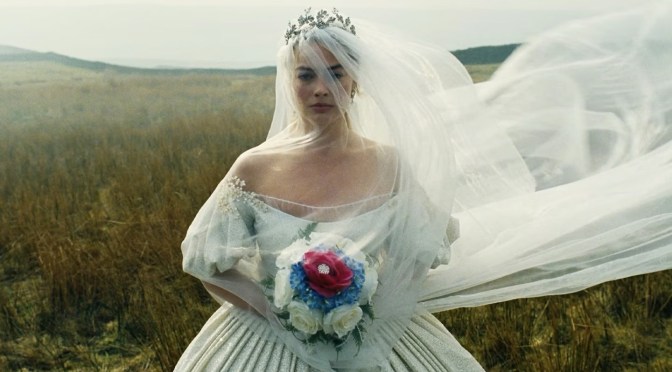
It’s not fealty that’s bringing the crowds to Emerald Fennell’s “Wuthering Heights,” a film that often feels less like an Emily Brontë adaptation than organic entity in and of its own right. No, these are bathtub sperm and FOMO fuelled walk ups, attracted to Fennell’s unique brand of zeitgeist chic and conservative baiting. To this end, the film starts strong, with heavy breathing giving way to a memorably erotic hanging. The corpse gets an erection and Vicki Pepperdine plays an aroused nun. Mercy, me. Where Fennell’s Heights will fell students of literature, however, there is ample here for those of film to digest. Much dazzles.
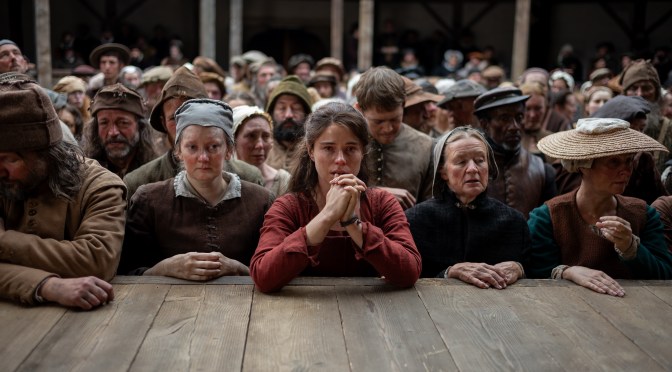
To weep or not to weep? It’s not so much a question as it is an inevitability in Chloé Zhao’s profoundly moving adaptation of Hamnet. Drawn from the equally affecting novel by Maggie O’Farrell, who takes joint credit for the film’s screenplay with Zhao herself, Hamnet draws woozily on the tragic 1596 death of the only son of William Shakespeare and Anne – here referred to as Agnes – Hathaway. In the sixteenth century, an opening epitaph advises, the names Hamnet and Hamlet were interchangeable. Hamnet’s supposition has Hamlet a tragedie born of truth. There’s no doubting, at least, the film’s emotional honesty in its exploration of the loss.
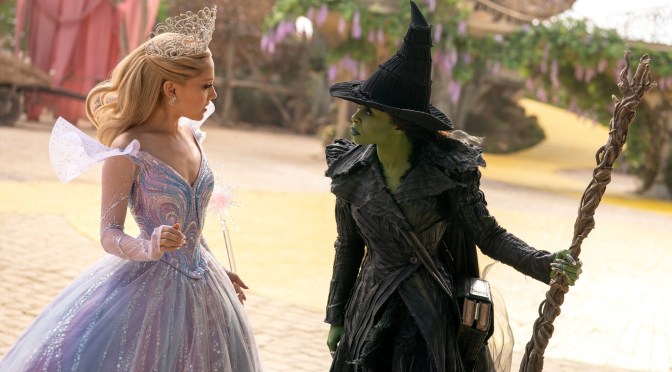
A year on, it feels legitimate to consider Jon M. Chu’s Wicked: Part One a barnstorming success. Not content with defying gravity at the box office, the film proved popular through the awards season and spawned the cultural moment that was Cynthia Erivo and Ariana Grande’s space-held press tour. Part two, subtitled For Good, dances through on a slightly tougher sell. It’s the stage musical’s less beloved second half, complete with notoriously weaker songs and haphazard attempt to crowbar the original Baum circle into Macguire’s square.

 The Film Blog