
★★★
The real world has caught up with Runway. Apparently. Just don’t tell The Devil Wears Prada 2, the twenty years gestated, gloss-fest sequel to David Frankel’s well-remembered original. Budget cuts may be à la mode in a breezy script by returning writer Aline Brosh McKenna but, when the top to bottom of Frankel’s (also back) screen looks every bit the $100m budget, it’s a somewhat shallow punch. Nostalgia can, after all, prove poisoned chalice. Sure, there’s a lot to like here but, make no mistake, the film wants heavily for its predecessor’s zippier outsider energy.
Just look at the cameos. Few dared face the ostensive wraith of Anna Wintour back in 2006. Come 2026 and Prada 2 is riddled with a who’s who of contemporary fashion. It’s a safe space. Catwalk catnip for the attention economy. Much as few would suggest the original dealt in razor sharp satire, The Devil Wears Prada 2 is as blunt as star vehicles come. Think Sex in the City. The best on offer here is the odd vague, and decidedly uncritical, jab in the direction of Ozempic. If financiers, advertisers, models, retailers, trend setters and consumers are all too valuable to skewer, who’s left to gut and plunder? It’s with something of a sigh that the film settles on the world at large, which is decries as, simply put, wrong. In the words of Emily Blunt’s first assistant turned Dior exec: ‘remember when magazines were a thing?’
Unto this brave new world, physical copies of Runway – the film’s fashion mag substitute for Vogue – are but a heritage relic. Nice to have but largely unthumbed by actual readers. The real numbers are online, on the app, and – whisper it – on the socials. Such serves to ensure that a returning Andy Sachs (Anne Hathaway), back at Runway after two decades of worthier journalism, is exactly the wide-eyed ingenue she ever was. That Hathaway barely looks a season older than she did when she last walked the offices of Runway helps the sell on this. Frankly, it’s an absurdity of the film that age does not appear to have troubled any of the central players. If time has been unkind to Miranda Priestly, it has been more than generous to Meryl Streep.
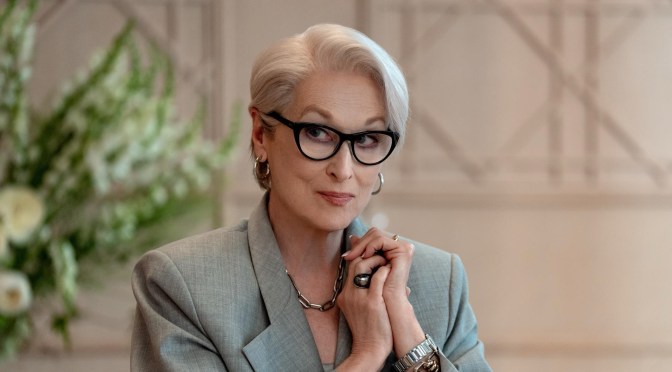
As per the demands of a more emotive contemporary, Streep’s Priestly feels a more human entity this time around. Still imperious, still “Queen Bitch” of the mannered slap down, but wearier somehow. If clawing your way to the top takes blood, sweat and tears, remaining there for the long run demands everything else you have left. It’s a typically magnetic turn from Streep that carries the burden with the thrill. Still upright at her side, albeit a step or two behind, is Stanley Tucci’s Nigel Kipling. He, too, proves tremendously affecting. The melancholy that defined Nigel in 2006, bubbling beneath the veneer of genial cattiness, has matured through decades since and allows for well earned progression as the film plays out. This is a game of survivors.
It’s a “fast fash” scandal that brings Andy back to Runway, with a rare lapse in judgement embroiling Miranda, not to mention her overheads, in the sort of row that the users of X and TikTok live for. Resolution, however, comes with peculiar ease to this initial nugget of would be stakes, allowing for a pretty, but pretty unfocused, middle stretch, before a final act asks us to fear for Runway’s very survival. Buoyancy aid additionals include whether or not reclusive divorcée Sasha Barnes (Lucy Liu) grant Runway an interview and a dreary romance for Andy, with Colin from Accounts’ Patrick Brammall. Justin Theroux proves far more entertaining as Emily’s beau, a dimwit devil with the purchasing power to buy all of this.
There are a clutch amusing lines sprinkled throughout, mainly courtesy of Blunt, while no minute passes without feeling perfectly amiable. Quite transparently, all involved are thrilled to be back. Groundbreaking? Not even in the ironic sense. Enjoyable? Perfectly so. Sometimes, that’s all fans want.

T.S.

