‘I think the magnitude was just beyond their comprehension’ says one voice at the close of this fascinating, intensely personal, curatorial documentary by Peter Jackson. The speaker is a First World War veteran describing his return to civilian life; in one fell blow, he strikes on the problem with current perceptions of the war experience. Fundamentally, there has always been something distancing about the jolty silent film footage that provides the modern viewer’s only way ‘into’ the trenches. Embracing new technological advances, however, Jackson has changed the game and produced the most visually visceral and true-to-life Great War documentary ever made.
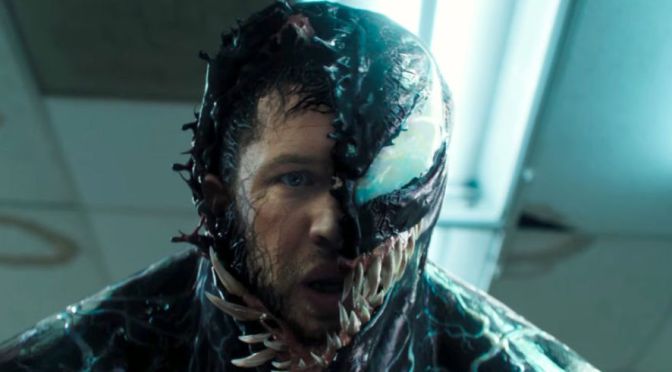
Having finally conceded Spider-Man to Disney’s branch of Marvel, Sony have a problem. Their biggest asset is essentially, temporarily, gone and they have no headline act for the not-so-new world of cinematic universes. To their favour, the studio have nine hundred comic book characters to play with in their historic acquisitions and room for world-building expansion. It’s just a shame that Sony’s answer to their big problem is Venom.
Nicolas Cage and Andrea Riseborough are hardly what you’d call natural screen bedfellows. She’s the rising star with a talent for ethereal nuance; he’s the rampant Yank with innumerable viral videos devoted to his outrageous acting style. Yet, in the sophomore feature of Italian-Canadian filmmaker Panos Cosmatos, they kind of click. Indeed, to dismiss Mandy as the latest Cage rampage feels a tad unfair, even if it does feature an instantly iconic, bathroom-based, mourning scene. To riff on Glenn Close in The Wife, this is much more – visually – interesting than that.