The arrival of a Power Rangers reboot in the present era of superhero overload was so inevitable that the most surprising facet of its 2017 debut is the fact that it’s taken quite so long to morph from the ether. Those able to remember the 1990s Mighty Morphin TV series may have in the intervening years forgotten just how joyfully awful it was, a prime example as it is of the ability of campy nonsense to transcend its own awfulness and achieve a nostalgic status of adoration. There is something admittedly iconic about badass Teletubbies in onesies vocally karate kicking there way through innumerable bad guys.
There’s a pivotal scene in Douglas Sirk’s All That Heaven Allows in which the reflected image of Jane Wyman’s Cary is framed within a television screen, bought for her by her family. Its a symbolically charged moment, the film revolving around the socially ‘scandalous’ relationship of an affluent widow and her younger gardener, dictating that a woman of Cary’s age and marital status must be prisoner to a life ruled by consumerism and the home. Sixty-seven years later, Anna Biller appropriates the image in The Love Witch, maintaining Sirk’s glorious technicolor, in her use of a mirror as the captive frame not of the woman, who moves freely in and out, but of the man, who is slavishly trapped in his bed. Whilst perfectly capturing the aesthetics of mid-twentieth century Hollywood, Biller’s film is a subversive, and deliciously addictive, feminist hit.
‘I’m going out to make the greatest picture in the world. Something that nobody’s ever seen or heard of!’
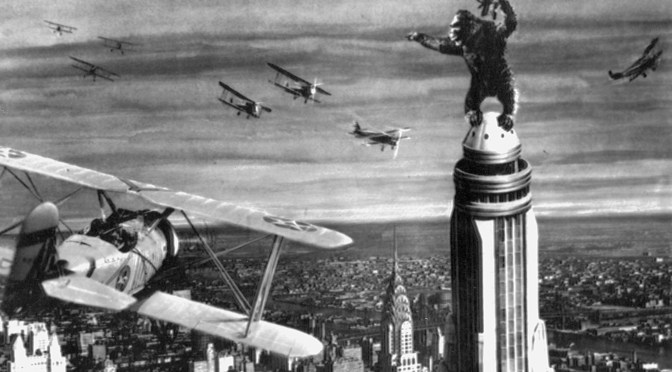
When Kong: Skull Island hits the big screens next week it’ll be a CGI behemoth taking centre stage, quite some distance from the 18” metal mesh skeleton of Merian C. Cooper’s 1933 original: King Kong. This month marks eight-four years since the first appearance of everyone’s favourite eighteen-foot ape and it would be fair to say that times have changed rather a lot in the meantime. For one thing, Jordan Vogt-Roberts’ reboot is unlikely to see Brie Larson subserve to the damsel in distress role of Fay Wray’s Ann Darrow. On the other hand, you might be surprised as to just how well the original stands up even today.


 The Film Blog