‘I’m going out to make the greatest picture in the world. Something that nobody’s ever seen or heard of!’
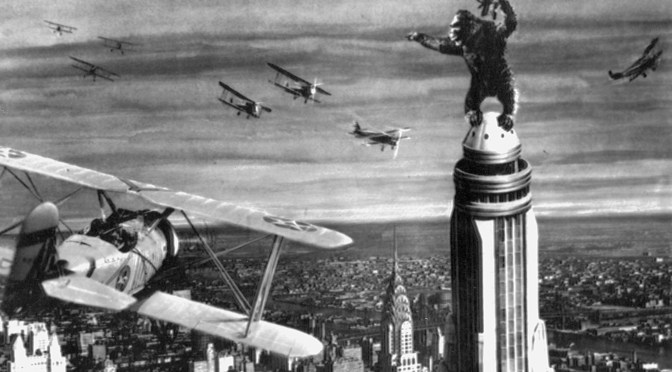
When Kong: Skull Island hits the big screens next week it’ll be a CGI behemoth taking centre stage, quite some distance from the 18” metal mesh skeleton of Merian C. Cooper’s 1933 original: King Kong. This month marks eight-four years since the first appearance of everyone’s favourite eighteen-foot ape and it would be fair to say that times have changed rather a lot in the meantime. For one thing, Jordan Vogt-Roberts’ reboot is unlikely to see Brie Larson subserve to the damsel in distress role of Fay Wray’s Ann Darrow. On the other hand, you might be surprised as to just how well the original stands up even today.
The X-Men franchise is like a box of melted chocolates, you never know what mutation you’re going to get. It is indeed a series that’s provided some serious ups and downs. For every popping candy/caramel barrel combination (Days of Future Past – deliriously good) they’ve pulled out a chocolate blob that’s lost its raisin (Apocalypse – you know, fine but it’s kind of missing the point). Therefore, it’s with an air of caution that one approaches Logan, Hugh Jackman’s last stand as the Wolverine after an impressive seventeen years. Jackman’s been an ever-solid presence since his first appearance in Bryan Singer’s X-Men, but up to now his standalone spin-offs have, frankly, been a bit of let down. Thankfully, Logan finally hits the mark. X marks the spot, if you will…
That the rape of the film’s protagonist, Michèle (Isabelle Huppert), is heard before seen – and in such a way that it could yet be consensual – addresses straight from the top the themes of complicity that will prove so directly challenging throughout the film. That this opening audio gasps over the name of its director, Paul Verhoeven, is equally telling.
The man who brought the world Basic Instinct is back after a decade’s hiatus with a bang.



 The Film Blog